Approachable AI
The confidence to work differently
Approachable AI helps people and organisations see what AI can make possible, build the capability to use it well, and apply it with imagination, judgement and ownership.
Training · Workshops · Talks · Consultancy
Over the last three years, I have worked with universities, specialist businesses, professional networks and cultural organisations on learning, exploration and practical application.
What the feedback shows
4 or 5 out of 5
4 or 5 out of 5
4 or 5 out of 5
4 or 5 out of 5
“In the week following the training, I was more productive than at any other point in my career.”
AI is moving extraordinarily quickly.
For many people that brings several reactions at once: excitement about what might be possible, uncertainty about what to trust, and a sense that the technology is becoming important faster than our understanding of it can keep up.
That mixed response makes sense. Generative AI is a powerful general-purpose capability, but most of us still encounter it through individual tools: a chatbot, an image generator, a new feature inside software we already use. Those things can be useful, but they give only a partial view of what AI can do.
Productivity matters, but it is too narrow a frame. AI can contribute across language, knowledge, analysis, synthesis, simulation, creativity, communication, research and many other kinds of work.
The bigger opportunity is to understand enough of that capability to recognise what it could make possible when connected to your own expertise, problems and ambitions — including things that may previously have been difficult, impractical or simply out of reach.
That might mean reducing some of the routine burden and creating more space for meaningful work, human connection and the parts of a role where human judgement matters most.
Getting good at AI starts with understanding what you're actually working with.
Approachable AI makes the underlying capability graspable through clear explanation, mental models, metaphor, analogy and demonstration. You don't need to become an AI technician. You need enough of a picture to understand why the technology behaves as it does, and enough confidence in that picture to explore what else it might do.
That understanding opens the door to fluency. Instead of asking “what's the right prompt?”, you become increasingly able to work with AI more flexibly and shape the interaction as it unfolds: giving it better context, changing direction, introducing ideas, asking for challenge, exploring alternatives, recognising weak output and knowing when to keep going or stop.
At its best, that can make working with AI surprisingly creative and enjoyable. The interaction becomes something you can explore rather than simply operate.
The more fluent you become, the more you can see, attempt and direct.
Capability, connected to the work that matters.
At the centre is a healthy and productive relationship with AI, grounded in your professional knowledge, judgement and creativity.
Approachable AI can help you explore where AI might genuinely add something, then develop the most promising possibilities around the real work: what you are trying to achieve, what good looks like, the constraints you are working within and the expertise you already bring.
At the centre is a healthy and productive relationship with AI, grounded in your professional knowledge, judgement and creativity.
AI can extend what you can do, sometimes substantially, while you continue to decide what matters, what needs checking and what you are prepared to stand behind.
The aim is not maximum AI use. It is to combine human expertise and AI capability intelligently enough to open up work that can be stronger, more creative, useful or valuable.
Start with what you need.
That might mean building understanding across a team, exploring an opportunity, putting AI to work on a particular task or taking existing capability further.
Help people become genuinely capable with AI
A keynote, workshop or deeper learning programme can bring people into the conversation about AI, helping individuals and teams build understanding, confidence and practical fluency.
Clear explanation, live demonstration, guided experimentation and discussion are adapted to the people involved and the work they do.
Find the opportunities worth pursuing
You may sense that AI could help, without yet knowing where or how. We can explore your work and context together, test possibilities and separate the genuinely promising ideas from those that are merely interesting.
Turn a promising idea into something useful
Together, we can work through how AI could help with a particular task, what that would involve and how to test the approach against the results you need.
Deepen advanced capability
For established users, the work can go further into sophisticated interaction, evaluation, experimentation and a broader repertoire of ways to use AI. Advanced does not simply mean more automation.
Connect AI to wider organisational priorities
Where AI raises bigger questions about priorities, capability or ways of working, Approachable AI can help leaders think through what those changes mean for their organisation and its people.
Rupert brings professional experience in strategy, operations, organisational development, leadership and working with people alongside his understanding of AI.
Approachable AI brings together two things I care deeply about: understanding technology and working with people.
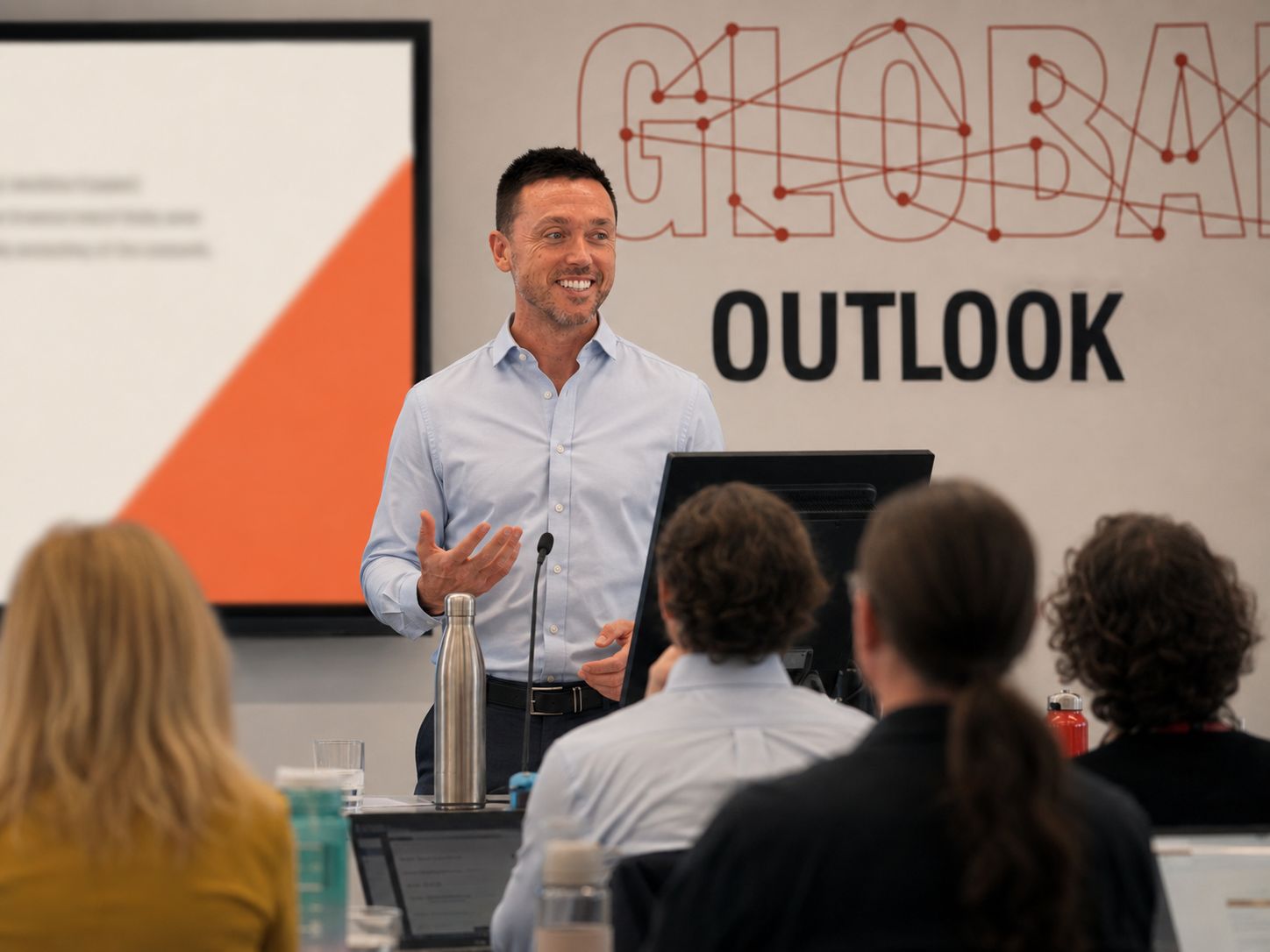
I'm fascinated by AI — how it works, what it can do and the much bigger questions it raises — but I enjoy the human part just as much: explaining, listening, discussing, challenging and helping somebody see something differently.
I start by understanding where people are coming from, what matters in their work and what they are trying to achieve. Questions, scepticism and disagreement are welcome because taking AI’s opportunities seriously also means examining its limitations, risks and trade-offs.
I want people to leave better able to make their own judgements about AI and direct the work themselves.
Approachable AI has worked with individuals, teams and organisations across the UK and Ireland on a wide range of projects, from focused sessions to programmes of learning and longer-running collaborations.
What people value
- clear explanations that make complex ideas easier to understand without oversimplifying them;
- examples and live demonstrations that make AI's capabilities tangible;
- practical methods for working with AI more effectively;
- relevance to their own roles, work and context;
- room to ask questions, explore uncertainty and challenge what they are hearing.
What keeps showing up
Strongly recurring themes across 16 post-session evaluations, drawing on more than 1,300 written responses.
Engaging. Enjoyable. Energising.
16 / 16
Changed perceptions of AI
13 / 16
More confidence to engage
14 / 16
Ready to explore further
15 / 16
Wanted to put it into practice
15 / 16
Each dot represents a report bringing together feedback from a session’s respondents, not an individual participant. Orange marks reports containing strong, recurring evidence of the theme.
Teesside University · JensonR+ · Association of Directors of Environment, Economy, Planning and Transport (ADEPT) · Devon, Plymouth and Cornwall Chambers of Commerce · Association of Research Managers and Administrators (ARMA) · LifeIn AI · Research Funders Policy Group symposium hosted by Wellcome · London School of Hygiene and Tropical Medicine · University of Aberdeen · National Centre for Academic and Cultural Exchange (NCACE) · University of Liverpool · Independent Slate Supplies · Munster Technological University · All-Island Research Excellence Network (AIREN) · University of Plymouth · University of Salford · Consultancy Connections (Scottish Research Commercialisation Network) · Ulster University · Northern Ireland Research Professionals Network (NIRPN) · University of Greenwich · Edinburgh Napier University · Atlantic Technological University · South East Technological University · local authorities across the UK
Teesside University · JensonR+ · Association of Directors of Environment, Economy, Planning and Transport (ADEPT) · Devon, Plymouth and Cornwall Chambers of Commerce · Association of Research Managers and Administrators (ARMA) · LifeIn AI · Research Funders Policy Group symposium hosted by Wellcome · London School of Hygiene and Tropical Medicine
University of Aberdeen · National Centre for Academic and Cultural Exchange (NCACE) · University of Liverpool · Independent Slate Supplies · Munster Technological University · All-Island Research Excellence Network (AIREN) · University of Plymouth · University of Salford · Consultancy Connections (Scottish Research Commercialisation Network) · Ulster University · Northern Ireland Research Professionals Network (NIRPN) · University of Greenwich · Edinburgh Napier University · Atlantic Technological University · South East Technological University · local authorities across the UK
“I can't recall an initiative that was so timely and so critical… Nor can I recall material that was better-considered and better-delivered.”
“Rupert brings exceptional attention to detail and real care to his work. I’ve particularly valued the thoroughness of his preparation and his commitment to understanding our participants, ensuring that their interests, questions and concerns shape the experience he offers. He makes a complex subject approachable and has a talent for creating space for critical discussion whilst keeping a workshop on track! His thoughtful attention to what people will take away and find useful in their own work is also much appreciated”
“Rupert was great to work with. He really understood our brief and delivered a high-quality AI session that struck the right balance between information sharing and practical application. He was organised, responsive and generous with his time, and the session was engaging, relevant and impactful. I would highly recommend working with him.”
“I can't recommend his training highly enough.”
“Exceptional format enabling people to share hopes, fears, doubts and ideas in a constructive and supportive way. Outstanding”
“Very engaging with practical applications whilst taking on board people's concerns. It felt like a continuing story rather than a regurgitated presentation.”
“I feel less of an AI expert than I did at the beginning but the session has equipped me with the tools to take the next steps.”
“AI as thought partner and human as thought leader”
“I really did not know how to ‘speak’ to AI, but now I am starting to really understand and how to begin to get the best from this.”
“Really useful training sessions that have opened my mind to AI opportunities and calmed some of my fears around it.”
“I’ve gone from sceptic to enthusiast and am looking forward to trying AI out going forward.”
Working closely with AI raises questions that go well beyond how to use the technology. Rupert writes about the changing relationship between human and artificial intelligence — how increasingly capable systems and our growing fluency with them affect the way we think, create, judge and work.
Explore ↗Start a conversation
The best way to explore a potential project is simply to talk it through. We can discuss what you have in mind, where AI could make a useful difference and how I might help.
Get in touch